Voyages Extraordinaires · 1828 – 1905

Jules
VerneFather of Science Fiction

Dare to travel beneath the seas, around the globe,
to the Moon — and to the very centre of the Earth.

Nantes, France · 8 February 1828

Descend
Journey to the Centre of the Earth Twenty Thousand Leagues Under the Sea Around the World in Eighty Days From the Earth to the Moon The Mysterious Island Five Weeks in a Balloon Michael Strogoff The Master of the World Journey to the Centre of the Earth Twenty Thousand Leagues Under the Sea Around the World in Eighty Days From the Earth to the Moon The Mysterious Island Five Weeks in a Balloon Michael Strogoff The Master of the World
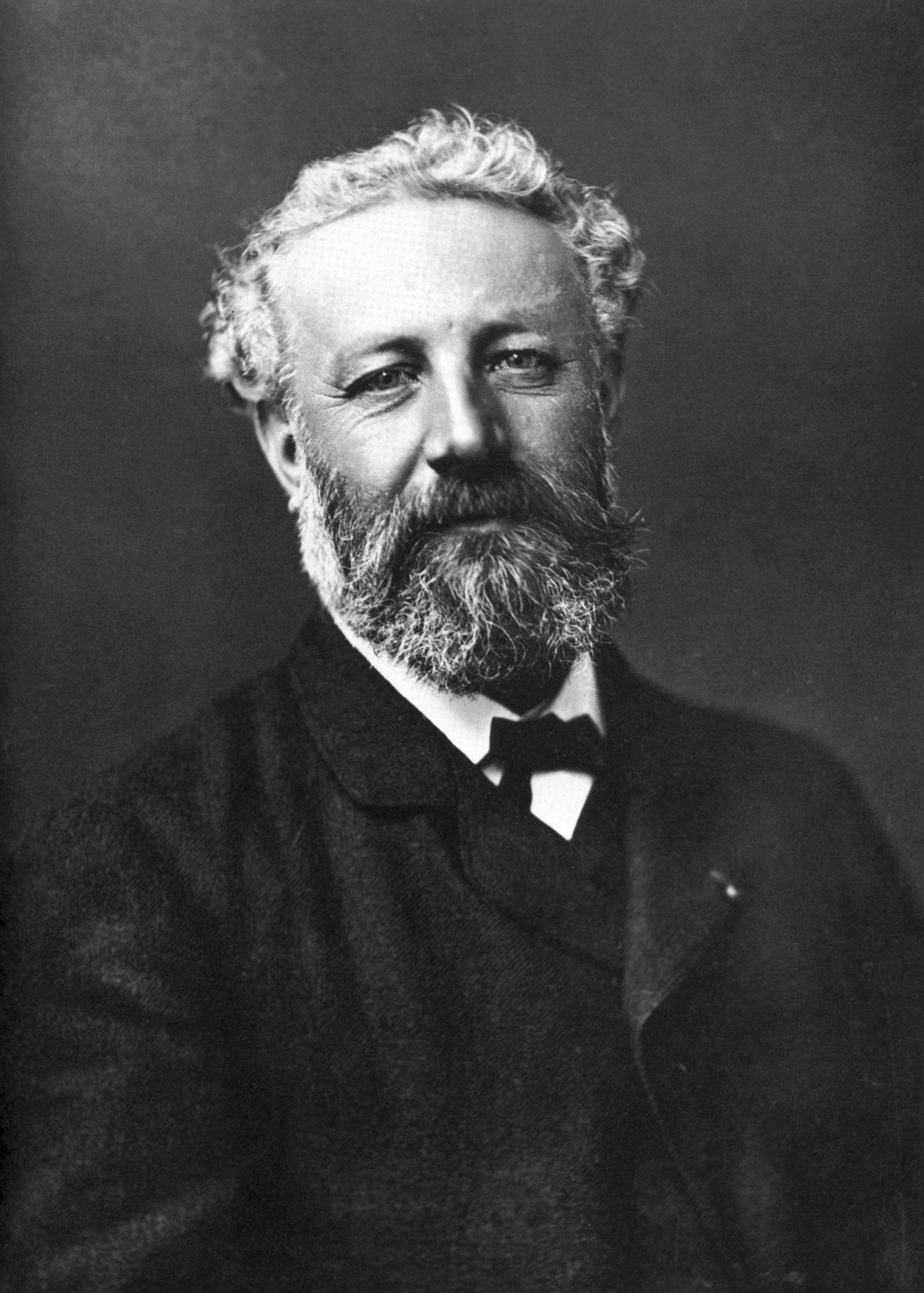
Jules Verne photographed by Félix Nadar, 1878

Photographed by Félix Nadar · Paris, 1878

A mind that dreamed
of impossible voyages

Jules Gabriel Verne was born in Nantes, France, on 8 February 1828. A lawyer by training, a dreamer by nature — he spent his life imagining machines that would carry humanity further than any map could show: beneath the oceans, to the lunar surface, through the Earth's molten heart.

His collaboration with publisher Pierre-Jules Hetzel gave birth to the Voyages Extraordinaires — sixty-four novels that redefined adventure, kindled the imagination of generations, and predicted technologies not yet imagined.

"Science, my lad, is made up of mistakes, but they are mistakes which it is useful to make, because they lead little by little to the truth."

— Journey to the Centre of the Earth, 1864
64Novels Written
2ndMost Translated
1863First Publication
Worlds Imagined

Works that shook the world

From ocean depths to lunar skies — each novel a universe entire.

I

Jules Verne

1870

Twenty Thousand Leagues Under the Sea

Captain Nemo commands the Nautilus through the ocean's darkest fathoms — a tale of mystery, madness, and the sea's terrible beauty.

Voyage Extraordinaire
II

Jules Verne

1864

Journey to the Centre of the Earth

Descend through volcanic passages into a subterranean world of prehistoric wonders, underground seas, and primeval terror.

Geological Adventure
III

Jules Verne

1872

Around the World in Eighty Days

Phileas Fogg wagers his fortune on a race against time — through continents, oceans, and the relentless tick of a pocket watch.

Global Adventure
IV

Jules Verne

1865

From the Earth to the Moon

A cannon fires three brave souls toward the Moon — a prophecy written over a century before Apollo 11.

Lunar Voyage
V

Jules Verne

1874

The Mysterious Island

Five men escape the American Civil War in a balloon, stranded on an island with a secret hidden beneath its volcanic core.

Survival Epic
VI

Jules Verne

1863

Five Weeks in a Balloon

The adventure that launched a career — across uncharted Africa, suspended between heaven and earth in a hydrogen balloon.

Aerial Voyage
Fathoms
20K

The Nautilus
& the Deep

Perhaps no vessel in all of literature has captured the imagination as wholly as the Nautilus — Captain Nemo's submarine kingdom. Seventy metres of iron and ingenuity, powered by the sea itself, furnished with libraries, pipe organs, and museums of the deep.

"The sea is everything. It covers seven tenths of the terrestrial globe. Its breath is pure and healthy. It is an immense desert, where man is never lonely, for he feels life stirring on all sides."

— Captain Nemo · Twenty Thousand Leagues Under the Sea

A visionary machine built a century before nuclear submarines — the Nautilus stands as Verne's greatest technological prophecy. Iron-willed, solitary, magnificent.

A Life of Extraordinary Work

1828

Born in Nantes

Jules Gabriel Verne enters the world in a city of ships and rivers — destined to write of voyages.

1863

Five Weeks in a Balloon

The debut that begins the Voyages Extraordinaires series with publisher Pierre-Jules Hetzel.

1864

Journey to the Centre of the Earth

Professor Lidenbrock leads his nephew into Iceland's volcanic depths — and into legend.

1865

From the Earth to the Moon

A cannon launches men moonward. The Apollo missions are still a century away.

1870

Twenty Thousand Leagues

Captain Nemo and the Nautilus descend into the world's most complete fictional ocean.

1872

Around the World in Eighty Days

Phileas Fogg's obsessive precision vs. the chaos of an entire world. The definitive adventure.

1905

Death in Amiens

Verne passes, leaving a handful of unpublished manuscripts and an entire genre behind him.

"In spite of the opinions of certain narrow-minded people, who would shut up the human race upon this globe — we shall one day travel to the moon, the planets, and the stars, with the same facility, safety, and certainty as we now make the voyage from Liverpool to New York!"

— Jules Verne

Beneath the volcanic crust

Professor Otto Lidenbrock discovers a coded runic message hidden for centuries. Its secret: a passage through Iceland's Snæfellsjökull volcano leads to the very heart of our world — a lost realm of prehistoric seas, gargantuan mushroom forests, and the bones of ages past.

🌋

The Descent

Through Iceland's volcanic maw, where the Earth breathes fire and steam.

🌊

The Sea

An underground ocean stretching beyond sight, lit by electrified stone.

🦕

The Beasts

Prehistoric monsters wage war in the primeval dark — unseen, enormous.

"Anything one man can imagine, other men can make real."

Jules Verne · 1828 – 1905

Ray Bradbury wrote: "We are all, in one way or another, the children of Jules Verne." He was not merely a storyteller — he was a cartographer of possibility, mapping territories that did not yet exist.

One Hundred Years
Before Apollo

In 1865, Verne's Baltimore Gun Club fires a projectile at the Moon from a cannon in Florida — the exact launch site of Apollo 11, a century later. The capsule holds three men. Three astronauts. The parallels are uncanny enough to be prophetic.

His Legacy Lives Everywhere

From submarines to space flight — Verne's imagination became reality.

🚀

Space Exploration

Yuri Gagarin and Wernher von Braun both cited Verne as their primary inspiration. The first men in space were children of his books.

🌊

Submarine Technology

Simon Lake, inventor of the modern submarine, credited Verne directly. The first nuclear submarine was named USS Nautilus in his honour.

✈️

Aviation

Pioneers of the airship and early aircraft drew on Verne's balloon voyages. Five Weeks in a Balloon painted the sky as a navigable sea.

📡

Communication

Guglielmo Marconi, inventor of wireless telegraphy, acknowledged Verne's influence on his imagination and ambition.